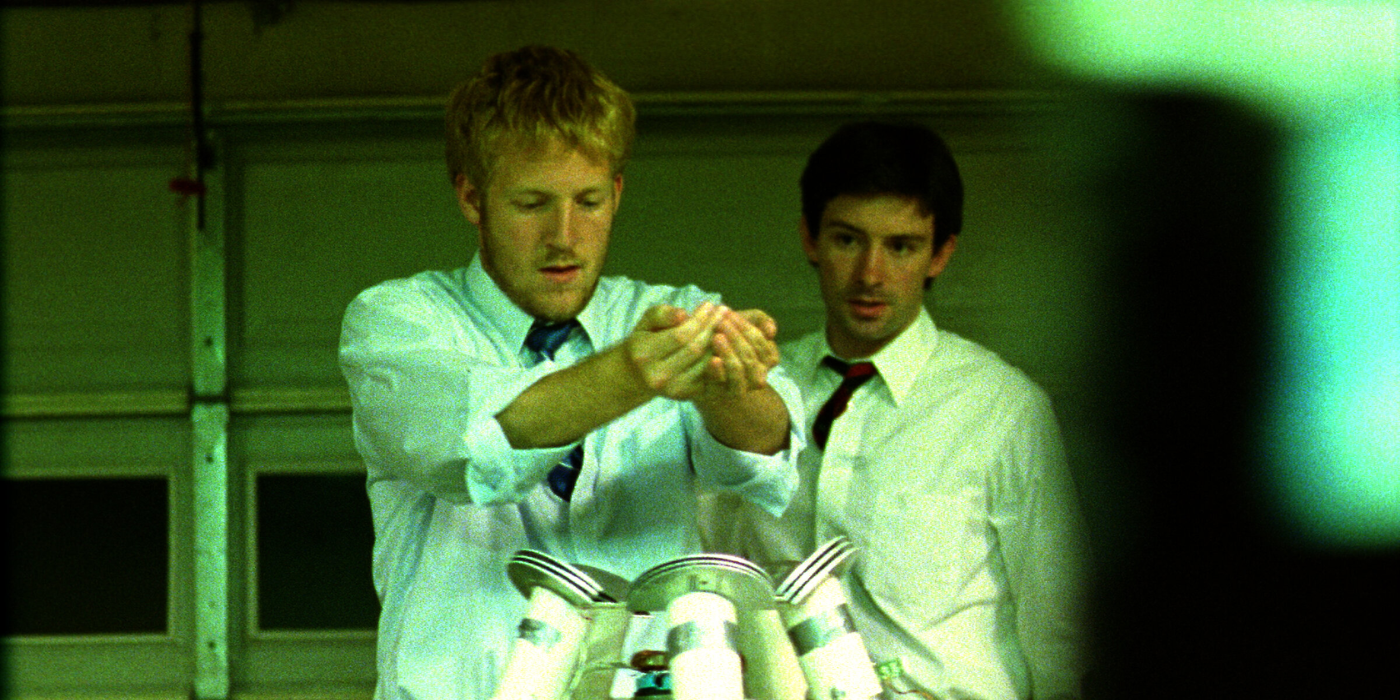
Desde su lanzamiento, Primer ha sido objeto de innumerables diagramas de flujo, cronogramas, explicaciones y debates en línea. A diferencia de las típicas películas de viajes en el tiempo, no sigue una fórmula sencilla. La historia es compleja, llena de paradojas y caos, pero increíblemente gratificante cuando finalmente la entiendes. Sorprendentemente, esta película de bajo presupuesto, rodada en un garaje de Dallas, Texas, ganó el Gran Premio del Jurado en el Festival de Cine de Sundance.
Realizada con sólo 7.000 dólares (aproximadamente el coste de un coche usado), la película fue un proyecto individual del ex ingeniero de software Shane Carruth, que se encargó de todo, desde la escritura y la dirección hasta la edición, la música y la actuación. Aunque los críticos lo elogiaron, la mayoría de los espectadores lo encontraron confuso y aburrido. Pero 22 años después, las opiniones han cambiado. Con una calificación del 73% en Rotten Tomatoes, Primer ahora se considera una película única y notable porque no rehuye la idea de que algunas historias son intrínsecamente complejas, impredecibles e incluso inquietantes.
Primer es una historia de viajes en el tiempo alucinante pero única
Aaron y Abe, dos ingenieros, pasaron las noches en un garaje intentando crear un dispositivo que pudiera aligerar objetos, con la esperanza de desafiar la gravedad y hacer una fortuna. Sorprendentemente, su trabajo condujo inesperadamente al descubrimiento del viaje en el tiempo.
Aaron y Abe estaban trabajando cuando vieron algo extraño: un extraño hongo que crecía rápidamente en un juguete Weeble dentro de su caja electromagnética. Parecía envejecer años en tan solo unos días, lo que les llevó a darse cuenta de que el tiempo se comportaba de forma extraña dentro de la caja. Si bien las películas han presentado innumerables dispositivos peligrosos, nunca habían visto algo como esto: un dispositivo que se parece a un microondas, pero con consecuencias potencialmente mortales. Este opera con reglas físicas duras.
El dispositivo de viaje en el tiempo funciona en dos pasos: primero lo activas y luego esperas un período igual a cuánto quieres retroceder antes de ingresar a la máquina. Entonces, si quieres viajar seis horas al pasado, tendrías que esperar dentro de un compartimiento pequeño y oscuro durante seis horas. Esto crea una limitación clave: solo puede retroceder hasta el momento en que encendió la máquina inicialmente. Es imposible volver a eventos que sucedieron antes de que la máquina estuviera en funcionamiento, como intentar cambiar la historia en la década de 1940. Esta restricción transforma la historia en un desafío de planificación y sincronización.
Los personajes utilizan una extraña máquina para realizar operaciones bursátiles exitosas. Cada día, lo encienden a las 8:00 a. m. y luego se esconden para evitar encontrarse con su yo pasado. Consultan el mercado de valores a las 5:00 p. m., ingresan a la máquina y esperan nueve horas antes de que los escupe a las 8:00 a. m., lo que les permite hacer apuestas ganadoras. La película enfatiza el realismo de este proceso a través de sus detalles crudos; evita efectos especiales. La máquina en sí es una simple caja gris que funciona con baterías de automóvil y emite un chirrido.
Las conversaciones están llenas de jerga técnica común entre los ingenieros. Los personajes mencionan casualmente conceptos complejos como “efectos Meissner” y “paladio” sin molestarse en explicarlos. Algunos espectadores han encontrado esto confuso, pero este enfoque obliga a la audiencia a prestar mucha atención al diálogo, ya que ahí es donde se desarrolla la historia.
Why the Film’s Confusion Is the Point
Many viewers find the movie Primer confusing, which is a major reason why it’s so well-known. It jumps between timelines unexpectedly, cuts off conversations mid-sentence, and features voices from characters we haven’t met yet. However, this confusion isn’t a mistake – it’s intentional. The film deliberately aims to make the audience feel as lost and disoriented as the characters themselves.
When Aaron and Abe repeatedly tamper with time loops, things spiral out of control. They begin creating duplicates of themselves, existing at the same time, and start deceiving each other. To try and fix things secretly, they each use special machines—essentially reset buttons—to reboot the timeline without the other realizing.
As a film buff, what really struck me about this movie is how the story starts to fall apart right as the characters’ world does. There’s this incredibly clever scene with Aaron – we see him seemingly absorbed in a basketball game through an earpiece while chatting with Abe. But then it hits you: he wasn’t listening to a game at all! He was replaying a conversation they’d already had, practically memorizing his own lines to manipulate Abe. It’s a brilliant way to show how fractured everything is becoming.
This fractured storytelling makes the audience feel like they’re piecing together clues, as characters often mislead both others and themselves. While some criticize the story for being confusing, moments like the “Granger Incident” – where a disoriented, panicked character arrives from the future in a coma – offer a glimpse of understandable chaos.
The movie doesn’t directly explain how the main character ended up in his situation, or what led to it. Instead, it relies on viewers to piece things together through subtle hints – like his changing appearance, the order of events, and his urgent phone calls. While this was a unique approach, it frustrated some viewers who prefer a straightforward story. However, for those who were willing to pay close attention, it became completely captivating.
For twenty years, viewers have created detailed charts trying to follow which version of Aaron appears in each scene. The movie implies that by the end, Aaron himself is unsure. This confusion, shared by both Aaron and the audience, highlights the story’s tragic core: in their attempt to manipulate time, the characters have lost track of their own identities.
Primer Leaves the Audience With An Uncomfortable Ending
Primer is an unusual science fiction movie that focuses on making its internal rules consistent, even if it doesn’t always create a thrilling experience. Many time travel films, like Looper, change the rules to build excitement – characters might disappear for dramatic effect. But in Primer, the rules of time travel are treated like strict scientific principles. When the characters tamper with time, they don’t face grand, dramatic consequences; instead, they experience physical side effects like headaches, bleeding ears, and worsening handwriting.
You know, we often see time travel in movies as this glamorous adventure, but Primer really flipped that on its head for me. These guys weren’t heroes; they looked absolutely wrecked – tired, sweaty, just plain unwell. It felt less like a power fantasy and more like a grueling test of survival. And it reminded me of another film where the consequences of time travel were really visible. When it’s revealed Adam is actually a younger Jonas, it’s not a triumphant moment. He barely recognizes himself, and honestly, it’s because his future self looks…worn down. Adam even says, “Traveling leaves its marks on all of us,” and it hits you – time travel isn’t always pretty or kind. It really takes a toll.
The time travel in the movie Primer is depicted as a damaging process, almost like radiation sickness. The characters endure days trapped in a time-travel device, repeatedly exposing themselves to its effects, just to gain a small edge. They sacrifice their health for personal gain. The film avoids any romanticized view of time travel; instead, it focuses on the characters’ selfishness, fear, and the exhausting repetition of reliving the same day. This bleakness carries through to the film’s conclusion, which offers no satisfying resolution.
The film doesn’t end with a dramatic resolution; instead, the friendship between the two leads breaks down into a tense, silent conflict. Abe attempts to repair things by restarting the time travel process, but Aaron is too consumed by his actions. He essentially kidnaps and replaces his former self, taking over his life. Aaron then flees the country, hinting at a continued, destructive pursuit of altering reality until nothing remains. This dark and pessimistic ending is likely why ‘Primer’ wasn’t a mainstream hit, but it’s also the reason it’s remained a cult classic and continues to resonate with audiences.
The film feels striking because it presents a very contemporary and cynical view of the genre. It’s the director’s way of showing how people in power misuse it today. The film suggests that if we could manipulate time, we wouldn’t use it for noble purposes like saving the planet or stopping tyranny. Instead, we’d likely exploit it for selfish gains – things like financial fraud, tax evasion, and personal betrayal.
It’s unlikely a movie like Primer could be made by a big studio today. With a tiny $7,000 budget, unclear dialogue, and a complicated story, it would likely be rejected immediately. However, over twenty years later, it’s still considered a standout film, not because audiences became more sophisticated, but because the science fiction genre has become less willing to take risks.
I’ll admit, Primer can be really confusing – it’s one of those movies that makes you think and re-think what just happened. It’s not a flawlessly made film, and the time travel isn’t laid out simply, but what really struck me was how brutally it portrays people becoming consumed by greed. It’s a dark and unsettling look at what ambition can do to you.
- Significado y significado del tatuaje de Garrett Explicación de la historia del origen fuera del campus: ¿Qué significa “Nullum Gratuitum Prandium”?
- 13 películas que han recaudado mil millones de dólares en taquilla desde 2020, clasificadas
- EUR CLP PRONOSTICO
- Temporada 2 fuera del campus: confirmación, historia y desarrollo Todo lo que sabemos
- USD CLP PRONOSTICO
- USD MXN PRONOSTICO
- Guía de la banda sonora de la temporada 1 de Off Campus
- Explicación del final del episodio 7 de la temporada 5 de The Boys: por qué Frenchie tuvo que morir
- EUR AUD PRONOSTICO
- 10 mejores villanos de Superman que podrían ser héroes si quisieran
2026-05-19 00:38